Aliengo
Tactical quadruped — inspection and mapping on terrain wheeled robots cannot traverse.
AI-assisted rating · No verified user reviews yet · Be the first to rate
Opens Unitree's own product page in a new tab. Robofy is independent — we research and compare, but pricing and orders happen on the manufacturer's site.
- University SLAM and robotics coursework: 4.6 h endurance, developer-friendly I/O (GbE, USB 3.0), and ROS support enable weeks of lab experiments and student projects without infrastructure lock-in.
- Utility and infrastructure inspection pilots: substation patrol, confined-space surveying, and construction site mapping on stairs and gravel—areas where Spot or larger industrial quadrupeds are overkill.
- Research facility monitoring: warehouse and data-center corridor patrol with optional LiDAR for 3D point clouds; integrable thermal or gas sensors for facility diagnostics.
Terrain versatility
Handles stairs, gravel, and uneven ground unreachable by wheeled AMRs, suiting utility inspection and construction mapping pilots.
- Obstacle avoidance
- Multi-floorRequires building integration
- Elevator support
- Voice interaction
- Screen interaction
- Autonomous charging
- Fleet management
- Indoor
- Outdoor
When to deploy this.
- University SLAM and robotics coursework: 4.6 h endurance, developer-friendly I/O (GbE, USB 3.0), and ROS support enable weeks of lab experiments and student projects without infrastructure lock-in.
- Utility and infrastructure inspection pilots: substation patrol, confined-space surveying, and construction site mapping on stairs and gravel—areas where Spot or larger industrial quadrupeds are overkill.
- Research facility monitoring: warehouse and data-center corridor patrol with optional LiDAR for 3D point clouds; integrable thermal or gas sensors for facility diagnostics.
When to skip it.
- Modest sustained speed (1.5 m/s) and 4.6 h max runtime make long-distance autonomous patrols impractical for large campuses or outdoor sprawl without multiple robots or frequent charging cycles.
- Lacks built-in manipulation; cannot open doors, manipulate objects, or perform in-situ repairs without expensive arm integration (e.g., Kinova Gen3 Lite); limits industrial deployment.
- Opaque field durability and regional support variability: no published independent performance benchmarks; repair network, lead times, and service costs differ by distributor, complicating total cost of ownership projections.
Use this moment to capture buying intent before the user drifts back into research mode.
Directional estimate based on price, labor offset, and readiness scores.
$50K - $59K
Available
How operationally ready this robot is for production deployment today.
Confidence in the published ROI numbers — how likely the savings actually materialize.
Share of the human task this category can credibly offload.
Fit with your target environment — lighting, floor type, congestion.
Expected maintenance load and downtime risk. Lower is better.
Long-horizon strategic upside — where the platform points 3+ years out.
Be the first to rate this robot — your rating helps calibrate the AI score.
Robofy separates manufacturer-confirmed facts from operator estimates. Anything not yet press-sourced or supplier-confirmed is tagged so you can decide how much weight to give it.
Specifications sourced from official Unitree shop, Robots International technical summary, and 4GltemAll datasheet aggregation (standing dimensions, battery capacity, payload, speed, runtime). Pricing from Unitree shop ($50K), RobotLAB RaaS and direct-purchase options ($59K, $1,238/mo), and secondary distributor listings ($30–50K). Capabilities and sensor details from Unitree technical documentation, IEEE Spectrum reviews, and regional reseller FAQs. Weight and folded dimensions confirmed across multiple retailer listings. Maturity level assessed from publication dates of academic deployment reports and pilot case studies (research-stage as of 2024–2026); no consumer or mass commercial field data.
- Deployment readinessInferred
- ROI clarityInferred
- Labor replacement potentialInferred
- Environment fitInferred
- Maintenance riskInferred
- Future potentialInferred
- MaturityEstimated
- CapabilitiesEstimated
- Price rangeSourcePress
- Lease rangeSourcePress
- AvailabilitySourcePress
- PayloadSourcePress
- Battery lifeSourcePress
- SpeedSourcePress
- DimensionsSourcePress
- Dimensions (mm)SourcePress
- WeightSourcePress
- NavigationSourcePress
- ConnectivitySourcePress
Track prices, compare robots, and get quotes on the go.
Other paths worth comparing.
- Match54Pilot Ready
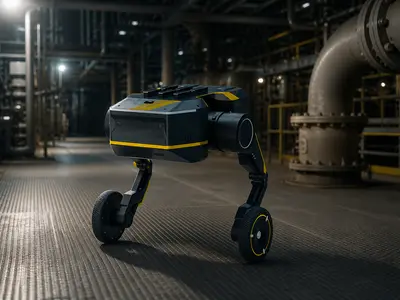 Direct Drive TechTITA
Wheeled-bipedal robot designed for urban sidewalk delivery and inspection on slopes and uneven terrain.
- Match45Pilot Ready
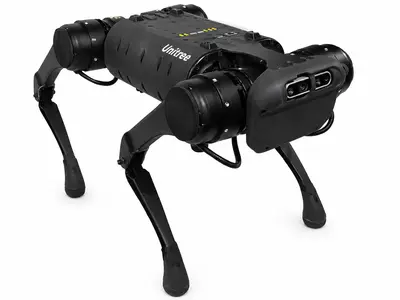 UnitreeA1
Lightweight quadruped for terrain inspection and research development, now superseded.
- Match54Pilot Ready
- Match54Pilot Ready
Frequently asked questions
How much does Unitree Aliengo cost?
Unitree Aliengo is priced at $50,000–$59,000 (manufacturer list pricing; final quotes vary by configuration and region).
What is Unitree Aliengo best used for?
Unitree Aliengo is best suited for: University SLAM and robotics coursework: 4.6 h endurance, developer-friendly I/O (GbE, USB 3.0), and ROS support enable weeks of lab experiments and student projects without infrastructure lock-in. · Utility and infrastructure inspection pilots: substation patrol, confined-space surveying, and construction site mapping on stairs and gravel—areas where Spot or larger industrial quadrupeds are overkill. · Research facility monitoring: warehouse and data-center corridor patrol with optional LiDAR for 3D point clouds; integrable thermal or gas sensors for facility diagnostics..
Can I buy Unitree Aliengo today?
Yes — Unitree Aliengo is commercially available and shipping today.
What are the best alternatives to Unitree Aliengo?
Buyers most often weigh Unitree Aliengo against Direct Drive Tech TITA, Unitree A1, Unitree As2. Use Robofy's head-to-head compare pages for a spec-by-spec breakdown.