Spot
Mature quadruped inspection platform with proven ROI in energy and construction; pay the premium for reliability and ecosystem depth, not hype.
AI-assisted rating · No verified user reviews yet · Be the first to rate
Opens Boston Dynamics's own product page in a new tab. Robofy is independent — we research and compare, but pricing and orders happen on the manufacturer's site.
- Power generation and substation inspection—Spot pilots at high-voltage facilities where human entry is impossible during operation, reducing costly maintenance shutdowns
- Mining and oil/gas site monitoring—Deployment at Mariana's copper mine, integrated with proprietary software for real-time data ingestion and anomaly detection
- First-response and disaster assessment—FDNY used Spot to survey collapsed parking garage, streaming real-time footage to minimize firefighter exposure
Proven industrial track record
Over 1,500 units deployed across energy, mining, and public safety, with documented use in substation inspection and disaster response, evidencing real-world reliability beyond pilot stage.
- Obstacle avoidance
- Multi-floorRequires building integration
- Elevator support
- Voice interaction
- Screen interaction
- Autonomous charging
- Fleet managementRequires building integration
- Indoor
- Outdoor
When to deploy this.
- Power generation and substation inspection—Spot pilots at high-voltage facilities where human entry is impossible during operation, reducing costly maintenance shutdowns
- Mining and oil/gas site monitoring—Deployment at Mariana's copper mine, integrated with proprietary software for real-time data ingestion and anomaly detection
- First-response and disaster assessment—FDNY used Spot to survey collapsed parking garage, streaming real-time footage to minimize firefighter exposure
When to skip it.
- Battery life of 90 minutes severely constrains shift length; multi-hour operations require staged rotations or docking stations.
- High cost and battery constraints limit ROI proof for smaller teams; fully configured systems often exceed $150,000.
- Ethical concerns about police surveillance and military applications have triggered public backlash, limiting deployments in some jurisdictions.
Use this moment to capture buying intent before the user drifts back into research mode.
Directional estimate based on price, labor offset, and readiness scores.
$75K - $100K
Available
How operationally ready this robot is for production deployment today.
Confidence in the published ROI numbers — how likely the savings actually materialize.
Share of the human task this category can credibly offload.
Fit with your target environment — lighting, floor type, congestion.
Expected maintenance load and downtime risk. Lower is better.
Long-horizon strategic upside — where the platform points 3+ years out.
Be the first to rate this robot — your rating helps calibrate the AI score.
Robofy separates manufacturer-confirmed facts from operator estimates. Anything not yet press-sourced or supplier-confirmed is tagged so you can decide how much weight to give it.
Information sourced from Boston Dynamics official product pages, IEEE Spectrum technical reviews, and independent assessments. Specifications verified across multiple PDF datasheets. Pricing reflects 2026 US market; fully configured systems with Spot Arm and Cam 2 approach $195,000; some enterprise contracts noted at $175,000–$300,000 depending on security and data integration tiers. The robot supports 260+ third-party payload integrations and has achieved operational deployment across energy, mining, construction, and public safety sectors; AI-powered capabilities (Gemini Robotics) rolled out April 2026.
- Deployment readinessInferred
- ROI clarityInferred
- Labor replacement potentialInferred
- Environment fitInferred
- Maintenance riskInferred
- Future potentialInferred
- Lease rangeEstimated
- MaturityEstimated
- CapabilitiesEstimated
- Price rangeSourcePress
- AvailabilitySourcePress
- PayloadSourcePress
- Battery lifeSourcePress
- SpeedSourcePress
- DimensionsSourcePress
- Dimensions (mm)SourcePress
- WeightSourcePress
- NavigationSourcePress
- ConnectivitySourcePress
Track prices, compare robots, and get quotes on the go.
Other paths worth comparing.
- Match65Deploy Now
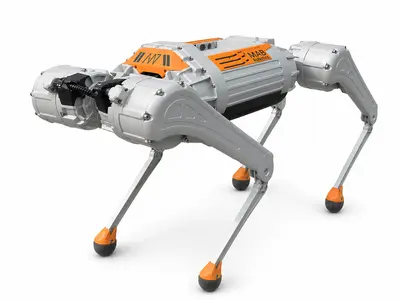 MAB RoboticsHoney Badger 5.0
Amphibious quadruped for sewer and flooded-tunnel inspection in dense underground.
- Match78Deploy Now
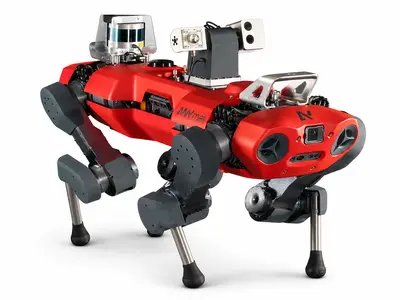 ANYboticsANYmal
Four-legged inspection quadruped for hazardous industrial plants with autonomous multi-floor mobility and gas-thermal sensing.
- Match64Deploy Now
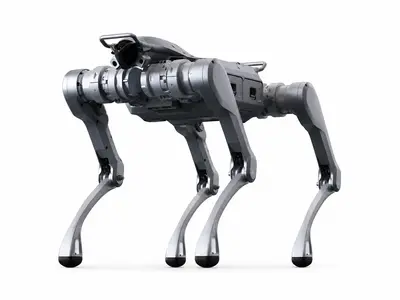 UnitreeA2
Industrial quadruped — 100 kg payload capacity for inspection and logistics in terrain
- Match55Deploy Now
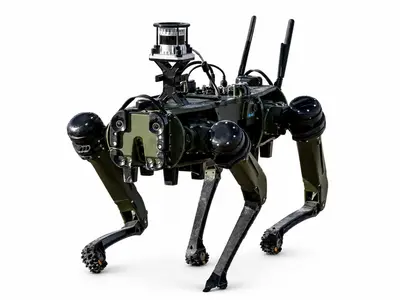 Ghost RoboticsVision 60
Rugged quadruped for defense, homeland security, and enterprise use in harsh, unstructured terrain.
Frequently asked questions
How much does Boston Dynamics Spot cost?
Boston Dynamics Spot is priced at $74,500–$100,000 (manufacturer list pricing; final quotes vary by configuration and region).
What is Boston Dynamics Spot best used for?
Boston Dynamics Spot is best suited for: Power generation and substation inspection—Spot pilots at high-voltage facilities where human entry is impossible during operation, reducing costly maintenance shutdowns · Mining and oil/gas site monitoring—Deployment at Mariana's copper mine, integrated with proprietary software for real-time data ingestion and anomaly detection · First-response and disaster assessment—FDNY used Spot to survey collapsed parking garage, streaming real-time footage to minimize firefighter exposure.
Can I buy Boston Dynamics Spot today?
Yes — Boston Dynamics Spot is commercially available and shipping today.
What are the best alternatives to Boston Dynamics Spot?
Buyers most often weigh Boston Dynamics Spot against MAB Robotics Honey Badger 5.0, ANYbotics ANYmal, Unitree A2. Use Robofy's head-to-head compare pages for a spec-by-spec breakdown.