ROBOTERA L7vsunitree B2
For power grid and petrochemical facility inspections, where thermal imaging and gas sensing payloads and all-terrain mobility justify cost., B2 is easier to deploy today — L7 is the longer bet on capability.
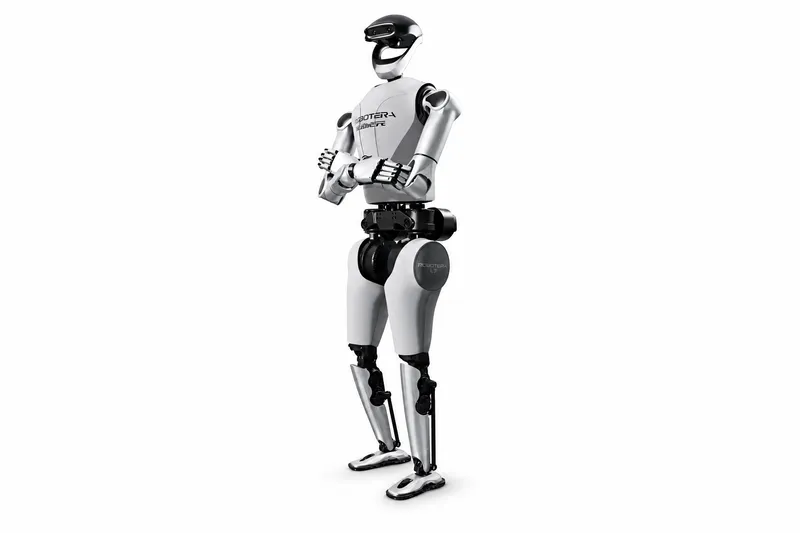
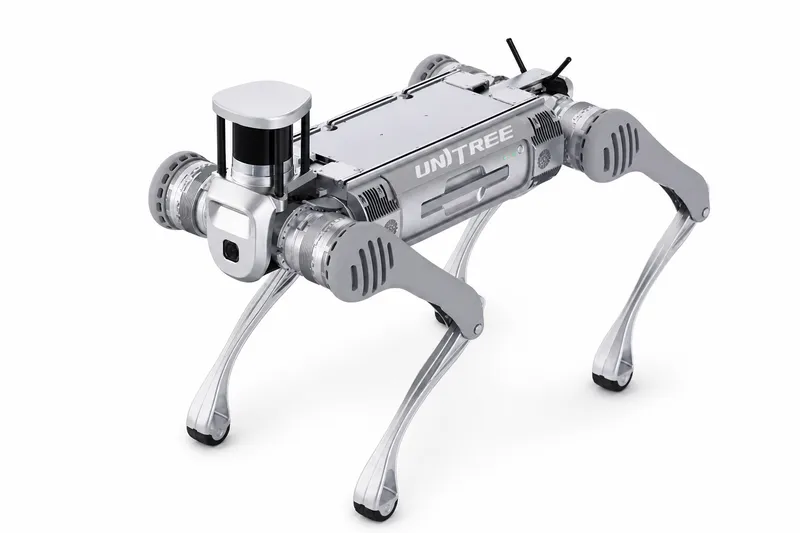
Category breakdown
Deploy & operate
Readiness, uptime, navigation & connectivity
- 62Deployment readiness72
- 60Maintenance confidence60
- Vision-led navigation (estimated)NavigationVision-led navigation (estimated)
- Wi-Fi / cloud fleet management (estimated)ConnectivityWi-Fi / cloud fleet management (estimated)
Cost & ROI
Price accessibility and ROI clarity
- 33Price accessibility41
- 55ROI clarity58
Capability
Payload, speed, runtime & labor replacement
- 72Labor replacement45
- 20 kg (dual-arm)Payload40 kg (walking sustained); 120 kg (standing)
- 4 m/s (14.4 km/h)Speed6 m/s
- 1–2 hours under moderate use per charge with swappable system (estimated)Battery4–6 hours (45 Ah / 2250 Wh capacity); 5 hours without load for 20 km mileage, 4 hours with 20 kg load for 15 km mileage
Fit & future
Environment fit, footprint & long-term upside
- 68Environment fit80
- 78Future potential68
- 500 × 400 × 1,710 mm (W × D × H)FootprintStanding: 1098 × 450 × 645 mm; Lying: 880 × 460 × 330 mm
Precision industrial tasks: sorting, scanning, screw-driving, and delicate operations like tearing paper towels and pulling curtains alongside heavy material handling
Power grid and petrochemical facility inspections, where thermal imaging and gas sensing payloads and all-terrain mobility justify cost.
If immediate deployment is the priority, choose B2. If the goal is to be ready when L7's capabilities mature, track it.