Apptronik ApollovsUnitree Go1
Apptronik Apollo leads on 5 of 7 dimensions — strongest on deployment readiness.

Apollo
3 wins
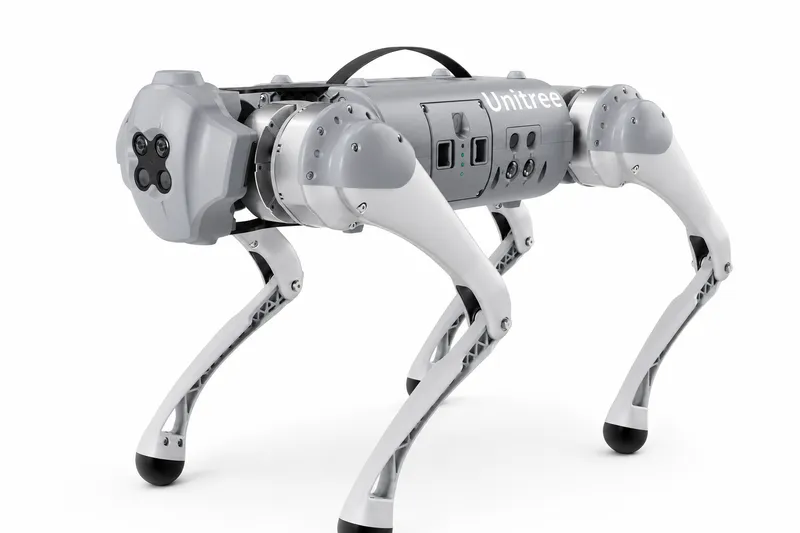
Go1
0 wins
Category breakdown
Deploy & operate
Readiness, uptime, navigation & connectivity
- 72Deployment readiness25
- 60Maintenance confidence60
- Vision-led navigation (estimated)NavigationVision-led navigation (estimated)
- Wi-Fi / cloud fleet management (estimated)ConnectivityWi-Fi / cloud fleet management (estimated)
Cost & ROI
Price accessibility and ROI clarity
- 54Price accessibility94
- 65ROI clarity15
Capability
Payload, speed, runtime & labor replacement
- 70Labor replacement10
- 25 kg (55 lbs)Payload3–5 kg depending on gait and task
- 3.4 km/h (walking speed); 1.5 m/s (5.4 km/h alternative specification)Speed4.7 m/s max; routine 3.5 m/s (Pro variant)
- Up to 4 hours on single battery pack; hot-swappable batteries in under 5 minutes enabling up to 22 hours daily operationBattery1–2.5 hours (lithium-ion 6000mAh)
Fit & future
Environment fit, footprint & long-term upside
- 68Environment fit40
- 75Future potential20
- UnknownFootprint645 × 280 × 400 mm (W × D × H at stand)
Apollo · Best for
Warehouse and logistics box/tote picking and transport (primary focus; proven in GXO trials).
Go1 · Best for
Classroom SLAM, gait-control curriculum in robotics programs for undergraduate labs
Final judgment
If immediate deployment is the priority, choose Apollo. If the goal is to be ready when Go1's capabilities mature, track it.