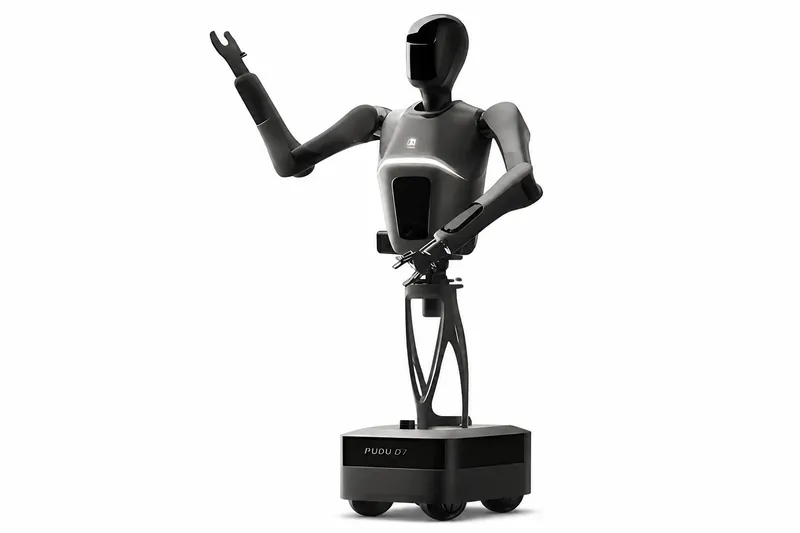
Apptronik ApollovsPudu Robotics PUDU D7
For warehouse and logistics box/tote picking and transport (primary focus; proven in gxo trials)., Apollo is easier to deploy today — PUDU D7 is the longer bet on capability.

Apollo
3 wins
PUDU D7
1 wins
Category breakdown
Deploy & operate
Readiness, uptime, navigation & connectivity
- 72Deployment readiness65
- 60Maintenance confidence60
- Vision-led navigation (estimated)NavigationVision-led navigation (estimated)
- Wi-Fi / cloud fleet management (estimated)ConnectivityWi-Fi / cloud fleet management (estimated)
Cost & ROI
Price accessibility and ROI clarity
- 54Price accessibility43
- 65ROI clarity55
Capability
Payload, speed, runtime & labor replacement
- 70Labor replacement60
- 25 kg (55 lbs)Payload10 kg (bionic arms)
- 3.4 km/h (walking speed); 1.5 m/s (5.4 km/h alternative specification)SpeedMaximum 2 m/s with 360-degree omnidirectional movement
- Up to 4 hours on single battery pack; hot-swappable batteries in under 5 minutes enabling up to 22 hours daily operationBatteryOver 8 hours continuous operation from battery exceeding 1 kWh
Fit & future
Environment fit, footprint & long-term upside
- 68Environment fit70
- 75Future potential80
- UnknownFootprint60 x 60 x 165 cm (width x depth x height)
Apollo · Best for
Warehouse and logistics box/tote picking and transport (primary focus; proven in GXO trials).
PUDU D7 · Best for
Hospital supply chain: autonomous transport of meal trays, medication carts, and linen bins on single floors with elevator access, reducing nursing aide labor during peak hours.
Final judgment
If immediate deployment is the priority, choose Apollo. If the goal is to be ready when PUDU D7's capabilities mature, track it.