agibot genie g2vsClearpath Robotics Dingo
For autonomous navigation experiments in confined spaces (hallways, corridors, lab benches), Dingo is easier to deploy today — genie g2 is the longer bet on capability.
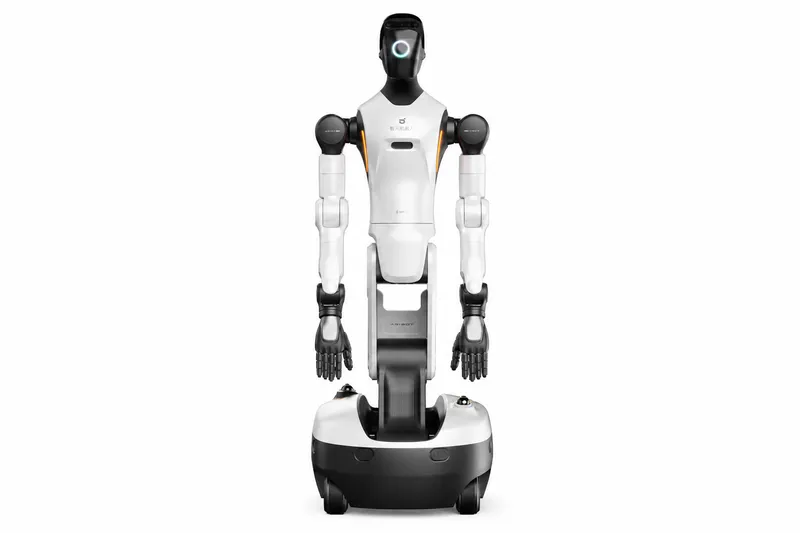
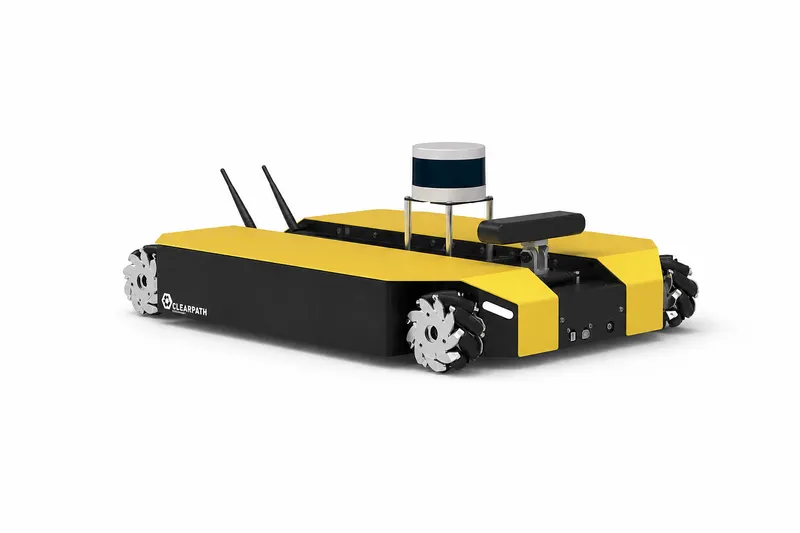
genie g2
1 wins
Dingo
2 wins
Category breakdown
Deploy & operate
Readiness, uptime, navigation & connectivity
- 75Deployment readiness82
- 60Maintenance confidence60
- Vision-led navigation (estimated)NavigationVision-led navigation (estimated)
- Wi-Fi / cloud fleet management (estimated)ConnectivityWi-Fi / cloud fleet management (estimated)
Cost & ROI
Price accessibility and ROI clarity
- 32Price accessibility81
- 60ROI clarity68
Capability
Payload, speed, runtime & labor replacement
- 70Labor replacement35
- 5 kg single-arm payloadPayload20 kg (44 lbs)
- up to 7 km/h walking speed; 1.5 m/s omnidirectional chassis mobilitySpeed1.3 m/s
- ~4 hours per pack with hot-swap enabling near-continuous dutyBattery1–4 hours (lead-acid 1–2 hours, lithium-ion 4 hours)
Fit & future
Environment fit, footprint & long-term upside
- 80Environment fit88
- 85Future potential76
- Height ~1.75–1.8 mFootprintDingo-D: 551 × 517 × 110 mm; Dingo-O: 686 × 517 × 114 mm
genie g2 · Best for
Tablet and smartphone assembly: picking, placing in test fixtures, sorting defective units at Longcheer production lines (310 units/hour throughput reported).
Dingo · Best for
Autonomous navigation experiments in confined spaces (hallways, corridors, lab benches)
Final judgment
If immediate deployment is the priority, choose Dingo. If the goal is to be ready when genie g2's capabilities mature, track it.