Aethon TUGvsClearpath Robotics Husky A300
For large teaching hospitals (200+ beds) routing medications, linens, and lab specimens 24/7 to reduce manual delivery workload, TUG is easier to deploy today — Husky A300 is the longer bet on capability.
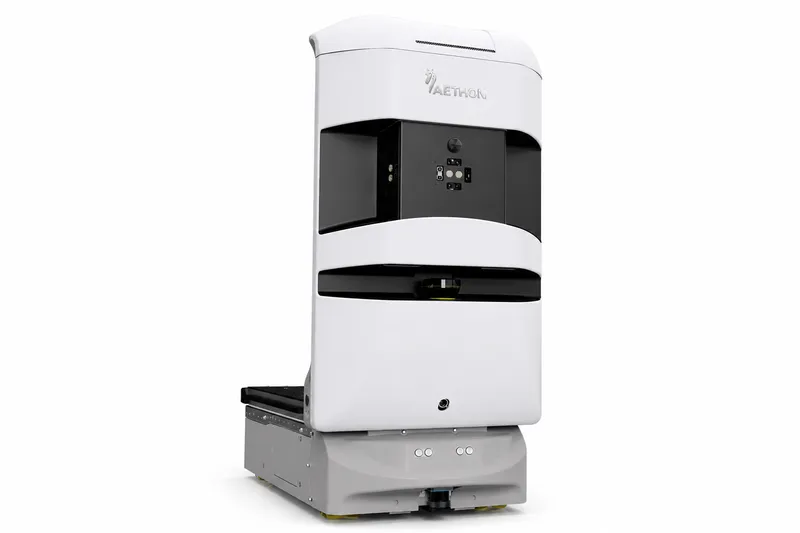
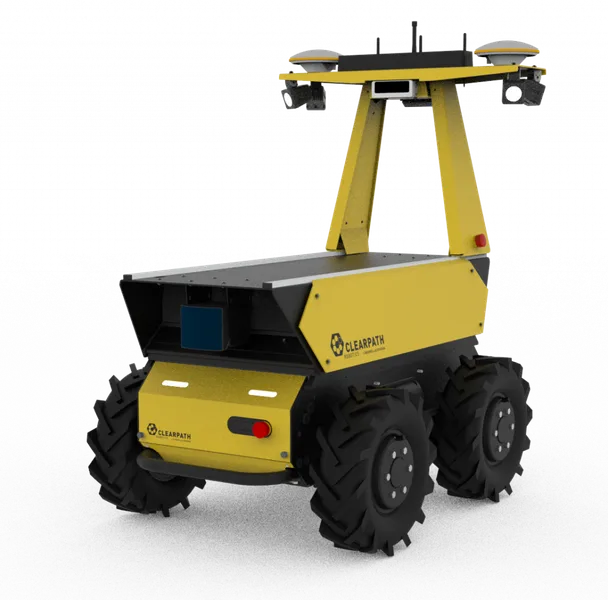
TUG
2 wins
Husky A300
1 wins
Category breakdown
Deploy & operate
Readiness, uptime, navigation & connectivity
- 95Deployment readiness85
- 60Maintenance confidence60
- Vision-led navigation (estimated)NavigationVision-led navigation (estimated)
- Wi-Fi / cloud fleet management (estimated)ConnectivityWi-Fi / cloud fleet management (estimated)
Cost & ROI
Price accessibility and ROI clarity
- 34Price accessibility81
- 90ROI clarity72
Capability
Payload, speed, runtime & labor replacement
- 85Labor replacement45
- 453.6 kg (1,000 lbs for TUG T3)Payload100 kg (220.4 lb)
- 1 m/s (3.6 km/h)Speed2 m/s (4.4 mph) maximum
- 24 hours intermittent chargingBattery4 hours standard; 8 hours with enhanced battery; 12 hours with extended battery
Fit & future
Environment fit, footprint & long-term upside
- 90Environment fit88
- 75Future potential80
- 1,160 × 570 × 1,220 mm (length × width × height)Footprint990 × 698 × 372 mm (L × W × H)
TUG · Best for
Large teaching hospitals (200+ beds) routing medications, linens, and lab specimens 24/7 to reduce manual delivery workload
Husky A300 · Best for
Precision agriculture research and autonomous navigation in difficult terrain
Final judgment
If immediate deployment is the priority, choose TUG. If the goal is to be ready when Husky A300's capabilities mature, track it.